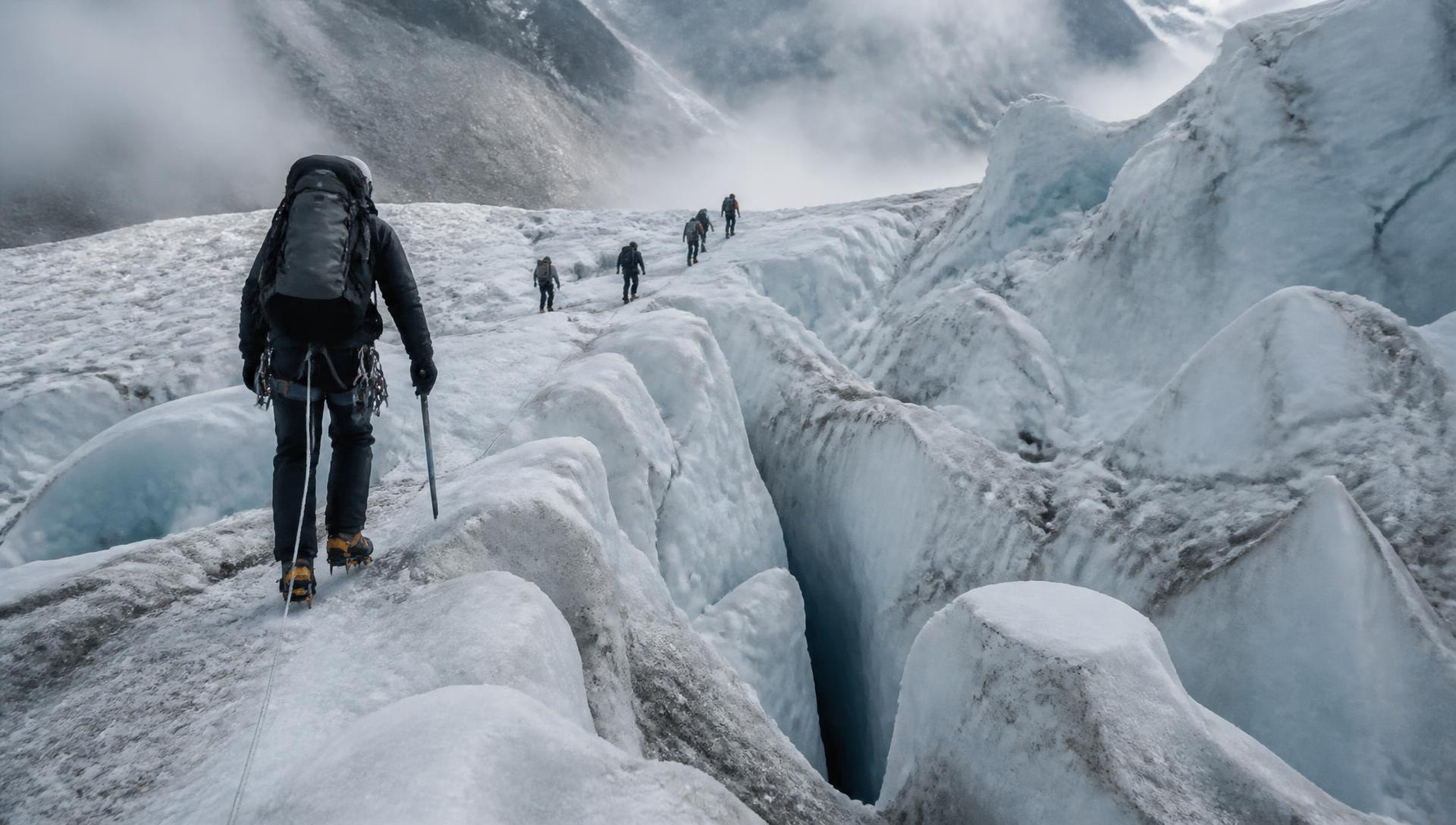
Rope team crossing a crevassed glacier during technical training

Basic + Advanced Mountaineering Course

Nepal · 17 Days · 6,000 m Summit Objective

IFMGA-Guided Technical Glacier Training

Register & Pay 10% Deposit

Course Summary

A Singapore-organised, IFMGA-guided 17-day Mountaineering Course in Nepal combining a 12-week preparation pathway, practical glacier training, high-altitude experience and a 6,000 m summit objective. The next listed departure is February 2027.

What You'll Train

  • Glacier travel
  • Rope systems
  • Crevasse rescue
  • Snow & ice anchors
  • Steep snow & ice climbing
  • Lead ice climbing
  • Belays & rappels
  • High-altitude safety

Difficulty, suitability and preparation

What to know before the mountaineering course

This is an IFMGA-guided practical mountaineering course in Nepal, organised from Singapore for international participants. A 12-week preparation pathway builds the physical base before 17 days of glacier, rope, snow, ice and high-altitude training; it is not a sightseeing trek or a guaranteed summit package.

International participants

Travel to Nepal for practical mountain training

TRN2SMMT organises the course from Singapore for participants from Singapore, the UK, USA, Australia and elsewhere. The 12-week preparation can begin before departure; the IFMGA-guided glacier, snow, rope and high-altitude instruction is conducted in Nepal.

Instruction and decisions

IFMGA-guided technical delivery

A qualified IFMGA/UIAGM mountain guide leads technical instruction, progression and on-mountain safety decisions with support from the Nepal mountain team. TRN2SMMT coordinates registration, preparation and the course experience; fitness coaching does not replace the guide's technical authority.

Who it is for

Suitable participants

The programme is designed for people progressing from trekking into mountaineering and for climbers who want structured practice of glacier, rope, snow and ice systems. Admission still depends on the experience, fitness, health information and availability supplied during registration.

Physical demand

Fitness required

  • A consistent aerobic base and recent long hikes
  • Capacity for consecutive mountain and training days
  • Sustained uphill movement in mountain boots
  • Leg, trunk, shoulder and grip endurance for equipment work

Technical progression

What is taught and what is assessed

The curriculum covers glacier travel, rope systems, crevasse rescue, anchors, steep snow and ice movement, belays and rappels. Instructors assess how safely and consistently each participant applies those systems. Progression is earned; completing the course does not imply unrestricted competence in every mountain environment.

High altitude

Acclimatisation and the summit objective

The 6,000 m summit is an objective, not a guarantee. Progress depends on acclimatisation, participant readiness, weather, route conditions and the mountain team's safety decisions. No participant should hide worsening altitude symptoms to protect a summit attempt.

Preparation plan

The 12-week preparation pathway

  • Build aerobic capacity before adding harder uphill sessions
  • Progress long hikes, pack carrying and selected back-to-back days
  • Develop strength and recovery without compromising mountain-specific volume
  • Use the boots and pack system intended for the course

Equipment

Gear and personal systems

Expect a course-specific clothing and technical-equipment list in the official deck. Fit matters for boots, crampons, harnesses, gloves and layers. Confirm what is supplied, what may be rented and what must be personal before purchasing equipment.

Common preparation mistakes

  • Arriving with technical enthusiasm but insufficient trekking fitness
  • Buying specialist equipment before checking the final course list
  • Treating a 6,000 m objective as a guaranteed summit
  • Assuming high fitness provides immunity from altitude illness

Not sure whether you are ready?

Use the Mountain Assessment to review your current physical preparation, then compare the Nepal Projects pathway if you are deciding which objective should come next.

Course Details

Location
Nepal
Duration
17 Days
Level
Basic – Advanced
Objective
6,000 m summit objective
Course Fee
USD 3,199 per person
Technical Delivery
Technical instruction and mountain safety decisions are led by a qualified IFMGA/UIAGM mountain guide, supported by the Nepal mountain team. TRN2SMMT organises the course and pre-departure preparation.
12-Week Preparation
A structured 12-week physical preparation pathway supports aerobic capacity, strength, pack-carrying tolerance and recovery before departure. It prepares the body; it does not replace technical instruction or acclimatisation.
Included Benefit
One 1-hour group sports psychology session is included in the course fee, supporting focus, decision-making and performance under pressure.
Course Dates
February 2027 departure. Exact 17-day dates are confirmed directly with accepted participants before travel is booked.

Full programme details, itinerary, inclusions and exclusions are provided in the official TRN2SMMT course deck.

Payment Schedule

10% Registration Deposit

USD 319.90

Payable online via Stripe upon registration.

Remaining Payment Schedule

20% — USD 639.80

Payable by bank transfer upon commencement of the personalised preparation programme.

70% — USD 2,239.30

Payable by bank transfer 30 days before departure.

Bank transfer details will be provided directly by TRN2SMMT when the respective payment becomes due.

The 10% registration deposit is non-refundable once the course date falls within the availability stated in your registration form. If TRN2SMMT is unable to offer a course date within your stated availability, the deposit will be refunded.

Course questions

Frequently asked questions

Is this a mountaineering course for participants from Singapore?
Yes. Participants can register from Singapore and travel to Nepal for the 17-day technical course. The glacier, snow and high-altitude instruction takes place in Nepal; TRN2SMMT does not describe it as a snow or glacier course conducted in Singapore.
When is the next mountaineering course departure?
The next listed departure is in February 2027. The exact 17-day travel dates are confirmed directly with accepted participants before they book flights, because the published course page does not yet have verified day-by-day dates.
Who leads the technical mountaineering instruction?
Technical instruction, progression and on-mountain safety decisions are led by a qualified IFMGA/UIAGM mountain guide with support from the Nepal mountain team. TRN2SMMT organises the course and the preparation pathway.
What is included in the 12-week preparation?
The pre-departure pathway develops aerobic capacity, uphill endurance, strength, pack-carrying tolerance and recovery across 12 weeks. It is physical preparation for the course, not an online substitute for practical glacier, rope, snow or ice instruction.
Is this mountaineering course suitable for beginners?
The course teaches foundational through advanced systems, but beginner does not mean unprepared. Participants need a sound trekking fitness base, must be comfortable in a mountain environment and should arrive ready for consecutive training days at altitude.
How fit should I be before the course?
You should be able to complete consecutive mountain days, sustain long uphill efforts in boots and recover well enough to learn technical skills safely. The registration review considers your current training and recent hiking experience.
Do I need crampon, ice-axe or rope experience?
Previous experience is useful but not mandatory for every applicant. The registration form records your current competence so the team can review suitability. The course teaches technical systems, but it is not a substitute for arriving with basic mountain fitness and appropriate preparation.
Can physical fitness prevent altitude sickness?
No. Fitness improves work capacity and recovery but does not prevent altitude illness. Acclimatisation, early symptom reporting and conservative guide decisions remain essential.
What equipment will I need?
The final equipment list is confirmed in the official course deck. Do not buy or rent specialist equipment solely from a generic online list; check compatibility, fit and what is supplied before committing.
What does the Nepal mountaineering course cover?
The course covers glacier travel, rope systems, crevasse rescue, snow and ice anchors, steep snow and ice climbing, belays, rappels and high-altitude safety.
Does the course include a summit?
The 17-day programme includes a 6,000 m summit objective. It is an objective rather than a guaranteed summit because mountain conditions, participant readiness and safety determine progress.
Is sports psychology included?
Yes. The course fee includes one 1-hour group sports psychology session focused on attention, decision-making and performance under pressure.
How does payment work?
The course fee is USD 3,199 per person. Registration uses a 10% deposit of USD 319.90, followed by 20% of USD 639.80 when personalised preparation begins and the final 70% of USD 2,239.30 30 days before departure.

Register for the Mountaineering Course

Complete your registration details before proceeding to the 10% registration deposit payment.

Personal Details

Course Availability

Please state the dates or date range you are available to travel. Include any dates you are NOT available.

Mountain Experience

Crampons
Ice axe
Rope skills
Rock climbing experience

Current Fitness

Health & Safety

Do you have any medical condition, injury or other consideration that may affect your ability to participate safely?

Emergency Contact

Acknowledgements